
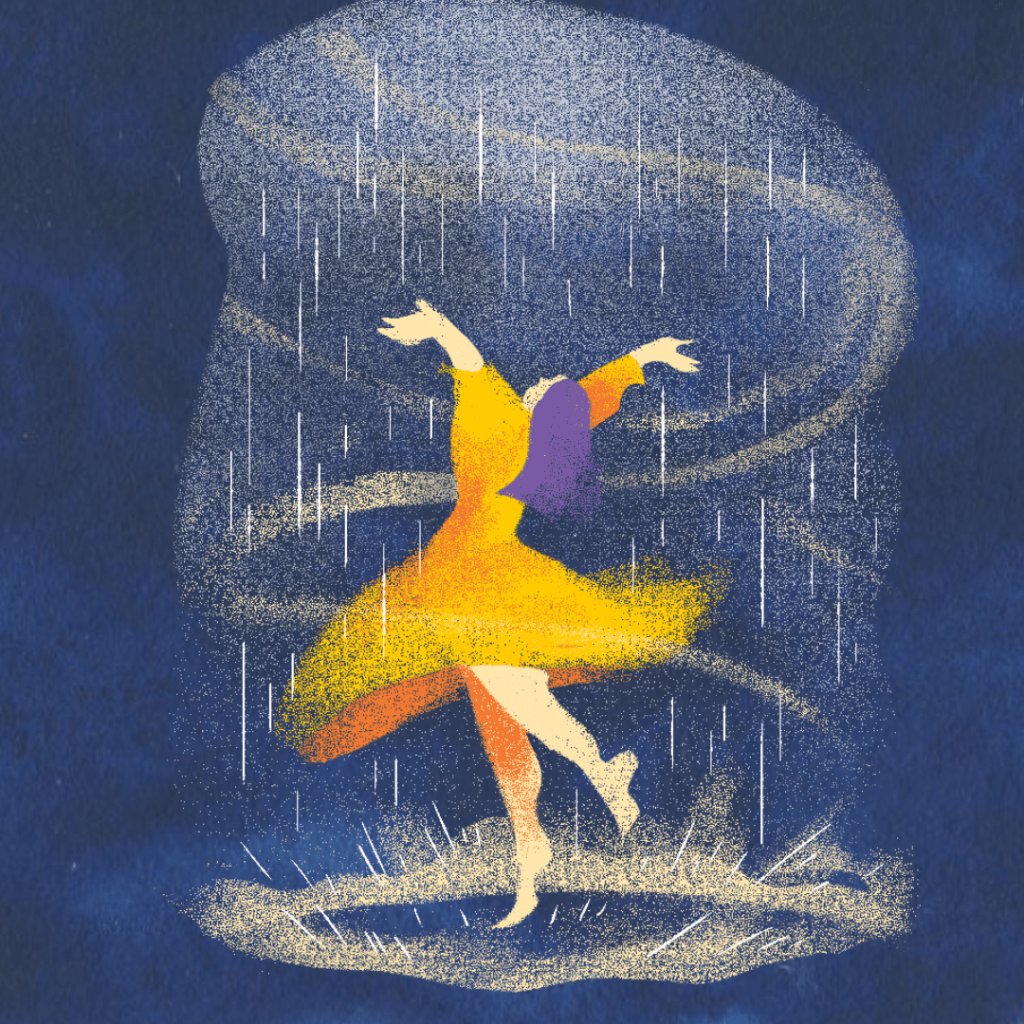
I got sick when I was 17, just a few months shy of my 18th birthday. I am now 26, 2 months away from 27. In that time I have gone through many forms of treatments, lots of procedures and one surgery to date. Although 26 has been kind to me, the years before were filled with trials and turbulence, as getting sick right before adulthood changed everything I expected those years to be.
When others my age were going on first dates, traveling, and enjoying the experiences that come with being a young adult, I was navigating medical bills, weighing the cost and benefits of medications, and rebuilding a life from scratch. My young adult mind shifted from finding the joys of life to figuring out how I could survive another day.
Looking back I would have never guessed that having a complex chronic disease, such Ulcerative Colitis, meant gaining complex trauma along the way. I always joke that when one is diagnosed with a chronic illness, their care team shouldn’t consist of their primary care provider and the specialist for their condition, it should include a therapist. The older I get, the more I feel that this should actually be the norm or at the least something the providers offer as a resource. As this could help patients navigate stressors in a way that reduces the amount that becomes triggers. As the years passed, I began to realize just how much these experiences had shaped me.
I actually didn’t reach out to start therapy until 5 years after my diagnosis. The ironic part, if a friend was severely struggling with their mental health, I was able to help them seek that help. But I couldn’t muster the courage to take that step for myself. Although I knew it was ok, it felt wrong for me to do it.
It was here, where I learned to hold space for myself and to recenter myself in my narrative. Therapy also helped me understand how much of my behavior was shaped by the culture I grew up in. Within Indo-Fijian communities, and even in the Pan-Desi diaspora, we are taught that to show love is to self-sacrifice for others. That we must always put our needs to side, for the sake of others. Even if it causes us harm. And this is a struggle that had started to bleed into all my relationships. My guilt and uncomfortability around my disability bore the vicious cycles of overgiving. When I flared I bore the guilt of not being able to show up, and as soon as I got better I would block out every moment of my day to make up for what I missed. Thus never truly letting my body, nor my nervous system relax.
As this cycle grew in my early 20s, I found myself justifying the hurt someone gave me. That to an extent where this justification, freed them from the need to take accountability. Unfortunately this affected my academic, professional, personal and even medical life. I lost friends who thought I milked my disability for attention, or to flake out on hangouts. I had to fight with professors to prove that I truly needed my accommodations, as they say my disability as an excuse for “special privileges” that wasn’t fair to my able bodied classmates. Doctors in the emergency room, who didn’t believe my pain was as bad as I said it was. I learned to shrink myself, the less attention on me the better. If I let no one in, the hurt they may inflict won’t cut as deep.
As I entered my mid-20s and my health stabilized, I finally had the space to think about life beyond survival. For many 2nd generation children the late teens, and early 20s are the time when we first start going on first dates and exploring our sexuality. Given my circumstances, it is something I wouldn’t have the time to do until recently. And it’s quite a weird experience, my journey has given me wealth of emotional intelligence and a very different perspective on life compared to my peers, however I am still learning how to navigate the dating world. WIth that said, therapy has helped me learn how to better navigate relationships as a whole.
You can hold space and understanding, while holding someone accountable for their actions. Honestly this has been a gamechanger for me. As this perspective allows me to be true to my emotional side, while not allowing myself to be taken advantage of. Something my therapist has said that stuck with me is, “ When you give up on love, whether that be platonic or romantic, you are giving up on yourself.” What she meant by this is, breakups are hard, falling out is hard. It can sometimes leave you feeling shattered. So it’s normal to take a pause, and to retreat. But if you never step out, you are denying yourself of finding the love ones that are meant to be life long. One of the biggest shifts for me came when I finally understood what love and self-love actually meant. You can learn to protect your peace, without needing to sacrifice community.
 Embrace Your Shakti
Leave a comment